CPR West Covina Logo

Booking-first, not brochure-first

Landing Page CRO for Local Service Businesses

A service page has one job: turn a person with a problem into a booked job. We rebuild yours booking-first, answer the objections a local buyer actually has, then test one thing a month.

  • 01Booking or call action above the fold
  • 02One structured test a month, one variable at a time
  • 03Tracking verified before any result is called
4.9 from 300+ Google and Yelp reviews on our own local service businessWe test these pages on our own paid traffic first

Assembly

How we lift a service page

Six steps. Nothing gets tested until step 1 shows us where people are actually leaving.

6 steps

  1. Watch what people actually do

    Session recordings and the drop-off points, before anyone argues about button colors.

  2. Read the objections in your own inbox

    The questions customers ask by phone and email are the ones the page has to answer.

  3. Rebuild the page booking-first

    A working booking or call step above the fold, not a contact form at the bottom.

  4. Answer the three objections in order

    Are you legit and licensed, how fast can you come out, what does it cost.

  5. Test one thing at a time

    Headline, then offer framing, then the booking step, so you know what moved the number.

  6. Keep the winner and go again

    Every month, a new test on the page that carries the most traffic.

From our own account

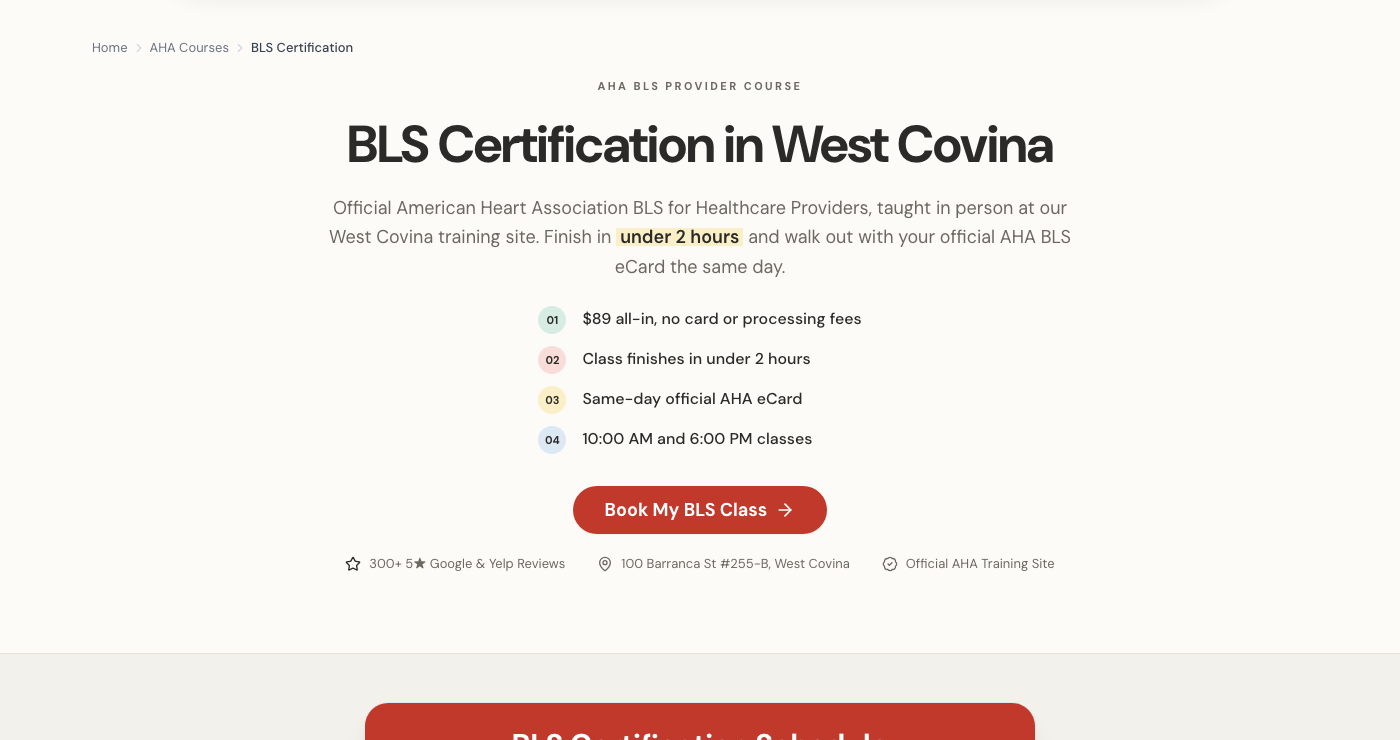
Booking-first landing page with the booking widget in place
Our own booking-first landing page and its booking widget.

Contents

What you get

In the box

  • 01Session recordings and drop-off analysis on your current pages
  • 02Rebuilt booking-first page for your highest-traffic service
  • 03Objection handling written from your own inbox and call notes
  • 04A working booking or call step on the page, no dead contact form
  • 05Mobile-first layout, because most of this traffic is on a phone
  • 06One structured test per month with a stated hypothesis
  • 07Conversion tracking checked before any test is called
  • 08Monthly report on booking rate, not on traffic

Price

What it costs

Starting at

$500/month

Founder pricingFirst 10 clients · Prices rise Jan 2027

What’s included

  • 01Ongoing testing on your course pages
  • 021 structured test per month
  • 03Monthly booking-rate report

Anything beyond the starting build gets a real quote after a 15-minute call.

Prices go up in January 2027. Book before then and your rate is locked for as long as you stay a client.

Common assembly error

A brochure where a booking should be

Without it

The most common landing page for a local service is a brochure. It opens with a stock photo, three paragraphs about how long the company has been in business, a list of services, and a contact form at the bottom. Every element is true and none of it answers what the person actually came to find out, which is whether you can fix their problem, how fast, and for roughly what price.

The second pattern is a page that does answer the questions but hides the action behind a click. The customer reads, decides yes, and then has to hunt for a form on another page that loads slowly and asks for twelve fields. That gap is where the traffic you paid for goes to die, and it never shows up as a problem because the page looks fine in a screenshot.

The third is testing without tracking. Someone changes the headline, calls look better that week, and the change gets declared a winner on noise. Or worse, the conversion tracking under it is under-reporting, so a page that is genuinely winning gets rolled back. We found a roughly 29% under-report in our own account, which is enough to invert the result of almost any test.

Landing page conversion optimization for local services

Optimizing a service page is different from optimizing a product page because the thing being sold is a person showing up, and speed is the constraint the buyer is under. That means the change that moves the number most is almost never the copy, it is making the next step instant: a bookable time slot, a call button that works, an arrival window stated plainly. A customer who can see that you can come Thursday morning converts at a different rate from one who has to ask. After that, the order of the page matters more than the words in it: can you do this job, how fast, what it costs, proof, then booking. We test in that order because that is the order the questions arrive in.

How do I get more bookings from my service pages?

Start by removing the steps between reading and booking. Put the action in the first screen, make it work without leaving the page, and make sure it works on a phone, because that is where most of this traffic is. Next, answer the three objections early and plainly: whether you are licensed and insured, how fast you can come out, and what it will roughly cost. Then check that your tracking is honest before you judge anything. Most pages we look at do not have a copywriting problem, they have a friction problem and a measurement problem stacked on top of each other.

What should a local service landing page include?

One service, not eight. A headline that names the service and the city. A booking step or a call button that works from the first screen. Your license and insurance stated clearly, because a buyer who cannot verify you is a buyer who keeps scrolling. What happens on the visit, how fast you can be there, and how pricing works, visible, because hiding it only filters out the people who were going to ask anyway. Proof from real reviews, ours currently sit at 4.9 from 300+ reviews. And a short answer to the how-fast question. Everything else is optional, and most pages fail because they add the optional parts before finishing the required ones.

How long does a landing page test take to be trustworthy?

Long enough to see enough bookings, which for most local businesses means weeks rather than days. The mistake is calling a test on a good Tuesday. We set a hypothesis and a stopping rule before the test starts, run one change at a time so the result is attributable, and refuse to call a result while the underlying conversion tracking is in question. If your traffic is light, we test bigger swings rather than small ones, because a page that is meaningfully different can be judged on less data than a button color can. Slower and honest beats fast and wrong, because a wrong call gets built on.

Do I need a new page, or should the existing one be improved?

Usually both, in that order. If the current page tries to serve every service, the first move is a dedicated page for the service that gets the most paid and organic traffic, because a single-intent page is the only fair baseline to test against. From there it is improvement rather than rebuilds: one structured change a month on the page that carries the most volume. Rebuilding repeatedly feels productive and teaches you nothing, since each rebuild changes twenty variables at once. The compounding comes from a page that gets slightly better every month and never gets reset.

Troubleshooting

Landing page questions, answered

Can you optimize pages you did not build?
Yes, as long as we can edit them. Most of our first-month wins on existing sites come from removing steps between reading and booking rather than from redesigning anything.
Do I need a lot of traffic for this to work?
You need enough bookings for a result to mean something. With light traffic we test larger changes instead of small ones, and we lean harder on session recordings and your own inbox, which tell you what is confusing people without needing statistical volume.
Will you change my branding?
Not unless it is hurting conversion, and we would tell you why first. The changes that move booking rate on service pages are structural: what is visible without scrolling, how many steps to book, and which question gets answered first.
Does this work with my existing booking or quote system?
In most cases yes. The one thing we check early is whether your booking widget sits inside an iframe that drops the click ID, because that both breaks attribution and often adds friction. If it does, we say so before quoting.
How do you decide what to test first?
Highest traffic page, biggest drop-off point, cheapest change. That order finds real money faster than a long list of best practices applied everywhere at once.
What do you report each month?
The test we ran, the hypothesis, what happened, and the booking rate before and after. Traffic numbers are context, not the point. If booking rate has not moved in a few months, we would rather have that conversation than send a prettier report.
What if the page I need does not exist yet?
Then it gets built first, priced per page, and the monthly testing starts once it is live and carrying traffic. We will tell you on the call which order makes sense for your site rather than selling you both by default.
How much does landing page CRO cost?
It is $500 a month, and that covers ongoing testing and improvement on your service pages plus the monthly report. There is no build fee, because we are working on pages that exist. If a page needs to be built from scratch first, that is quoted per page, and you get a real number after a 15-minute call.

Need a hand

Find out where your page loses people

Book a 15-minute call. We will open your highest-traffic service page with you, show you the steps between reading and booking, and name the first thing we would test.

We work with local service businesses nationwide