01How long does it take to get the booking calendar live?+
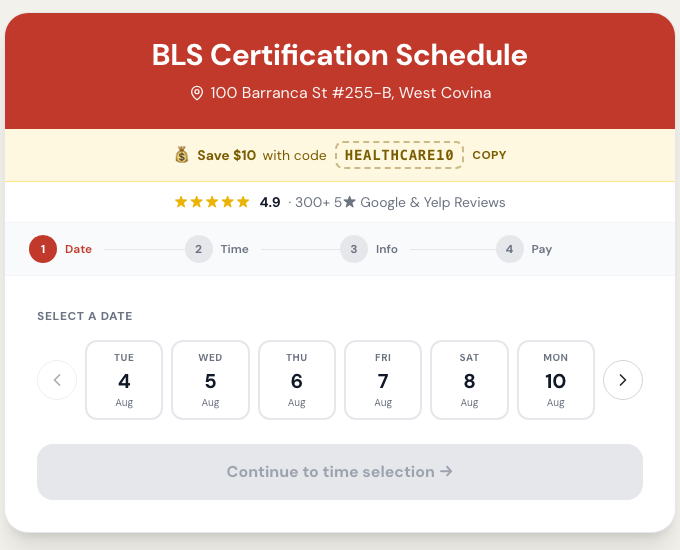
The widget is the fast part. Embed the snippet, connect your calendar and your payment processor, load your course list and session schedule, and you are taking bookings. The longer work is importing past students and payment history, which matters for the renewals engine but is not required to start booking.
02Does it work on my existing website?+
Yes. It embeds into the site you already have. If your site is on a platform that makes embedding painful, that usually comes up on the first call and we tell you before you commit to anything.
03Can students book more than one seat at a time?+
Yes. A manager booking four staff into the same session is one of the most common flows, so seat count is part of the booking, not a workaround where they check out four times.
04What happens when a class fills up?+
The session stops showing as available and the seat count reflects real remaining capacity, so you cannot oversell a class. Seat caps are set per session, because a class with six manikins is not the same as a class with twelve.
05Do instructors see the bookings?+
Yes. Class events sync to Google Calendar or the calendar you already use, so instructors see class day where they already look instead of in a system they have to be trained on.
06Can I take phone bookings too?+
Yes. Phone bookings get entered against the same sessions, so the roster, seat count, and revenue stay accurate. That also matters for ad tracking, because phone sales are the ones most often missing from your ad account.
07Is this only for CPR companies?+
It is built for CPR and certification training companies because that is the business we run. The same mechanics fit swim schools, driving schools, dental CE providers, and trade certification programs, any business that sells classes and issues cards that expire.
08What does it cost?+
The booking calendar starts at $500 to build, then $49 a month. That covers one location, booking confirmations, and events written to the calendar of your choice. More locations, more course types, and importing existing student data are what move the number above that.