Pet bird first aid, step by step
A pet bird can look fine until it is seriously ill, so a bird huddled on the cage floor, or bobbing its tail with each breath, needs an avian vet now. A resting bird under 300 grams takes 30 to 60 breaths a minute, and a 10% weight change is worth a call.
Written by Justin Alcalde, AHA and American Red Cross instructor, CPR West Covina · Reviewed
Pick the emergency
What normal looks like in a pet bird
Size changes almost every number, so a budgie and a large parrot will not match. Feathers can hide even severe weight loss, so a gram scale and the cage paper tell you more than a glance.
| Check | What is normal | How to check |
|---|---|---|
| Weight | Steady. Call an avian vet about a 10% gain or loss, or a loss 3 days in a row | A digital scale that reads in grams, at the same time of day. The Association of Avian Veterinarians (AAV) suggests weekly; the 3 day rule needs daily weighing. For a 30 gram bird, 10% is only 3 grams |
| Breathing at rest | Barely noticeable, beak closed, tail still. Merck lists 30 to 60 breaths a minute in birds under 300 grams and 15 to 30 in birds of 400 to 1,000 grams | Count from across the room before you handle your bird. After handling, breathing should settle within 3 to 4 minutes. Open beak breathing or a bobbing tail while resting can mean breathing trouble: go now |
| Posture and feathers | Upright on the perch, feathers smooth, eyes bright and fully open | Look from a distance. Fluffed feathers, half closed eyes, more sleep than usual or sitting low on the perch can be signs of illness: call an avian vet |
| Droppings | Formed green or brown feces, white urates and a little clear urine. Most birds pass one every 20 to 30 minutes | Plain paper on the cage floor, changed daily, so you can see the number, color and texture |
How to check your bird, mostly by watching
Handling makes a bird breathe faster and its heart race, so watch first and count before you touch. A scale with a perch on top lets a tame bird step on by itself.
Weigh in grams
Once a week or more, at the same time of day. Log it.
Watch breathing from across the room
Beak closed, tail still. Count before you pick your bird up.
Read the fresh droppings
Count them, and compare color and texture with your bird's usual.
Check nostrils, eyes and vent
Clean and dry, with no crust, discharge or stained feathers.
Note food and water
Eating or drinking much more or less than usual: call an avian vet.
What a change in droppings can mean
Each dropping has three parts: green or brown feces, chalky white urates and clear liquid urine. Diet and stress can change them for a short time, and nectar eaters such as lories normally pass wetter ones. VCA advises an avian vet when droppings stay abnormal for more than 24 hours. Blood spots away from the droppings can come from a broken blood feather, and a straining hen may need our egg binding guide.
| What you see | What it can be a sign of | What to do |
|---|---|---|
| Formed green or brown feces, white urates, a little clear urine | Normal | Nothing. Red or orange pellets can tint the feces to match |
| Watery, but the feces part looks normal | Extra urine, often from fruit, wet foods or stress. Without those, it can be a sign of kidney trouble | Call an avian vet if it lasts past 24 hours |
| Loose, mushy feces | True diarrhea, which can come with serious illness | Call an avian vet today. Go now if your bird also seems unwell |
| Green or yellow urates, the part that should be white | Liver trouble, an infection such as parrot fever, or lead poisoning | Call an avian vet today |
| Black, tar like feces | Digested blood from bleeding in the gut, or lead poisoning | Go to an avian vet now |
| Fresh red blood | Bleeding low in the gut or at the vent, egg binding in a hen, a growth, or lead poisoning | Go to an avian vet now |
| Whole, undigested seed | A digestive problem, such as avian gastric yeast or a nerve disease of the gut | Call an avian vet today |
| Far fewer droppings than usual | A bird eating too little, or a hen that is egg bound | Go to an avian vet now |
Watch the steps
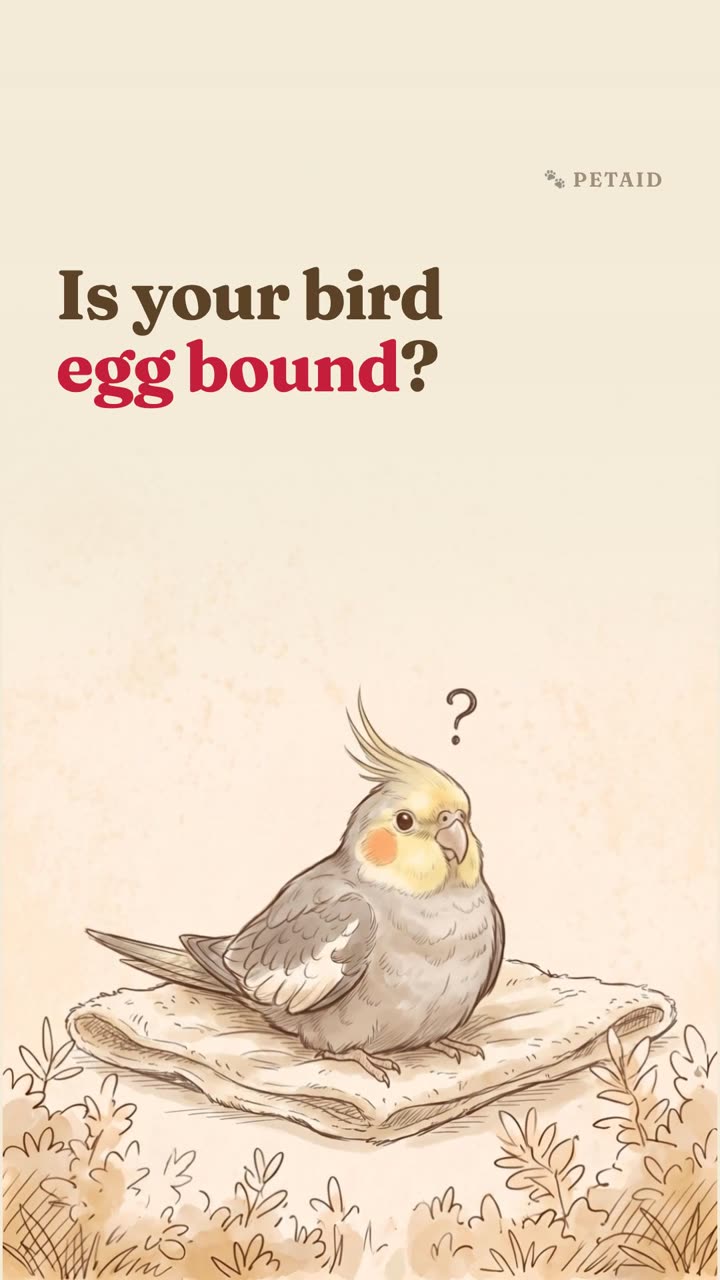 Is your bird egg bound?
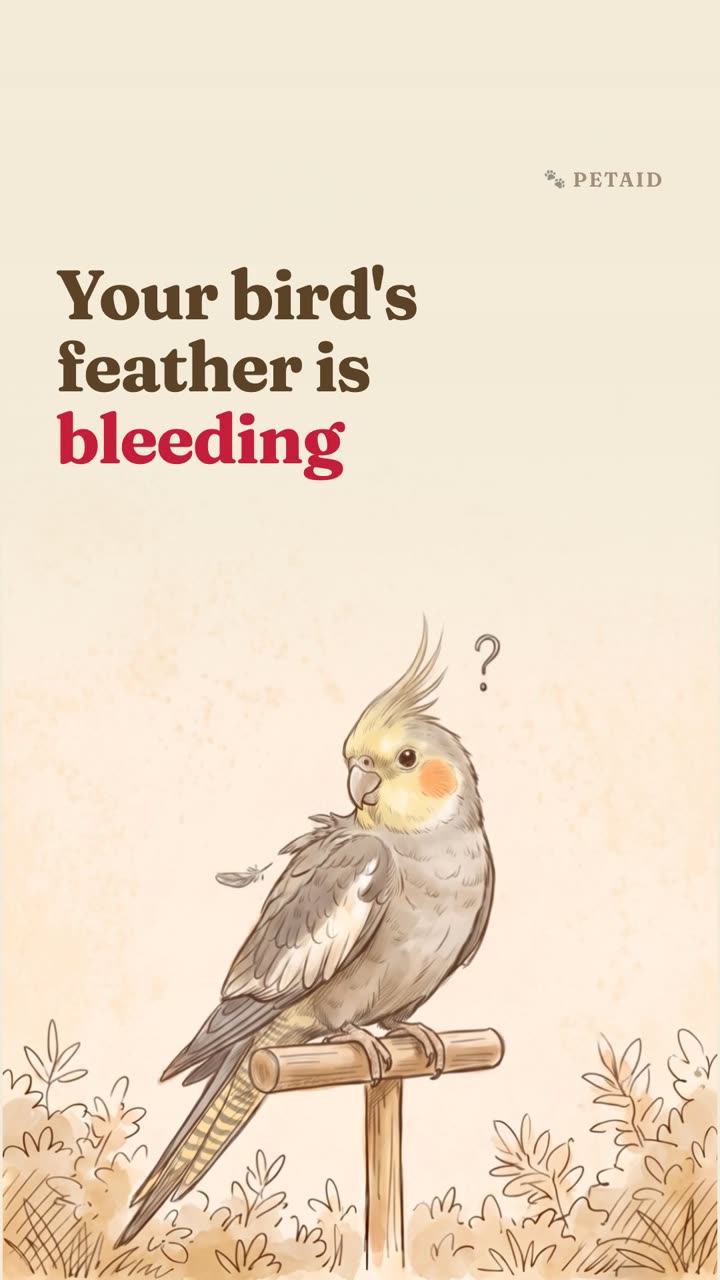 Your bird's feather is bleeding: what to do
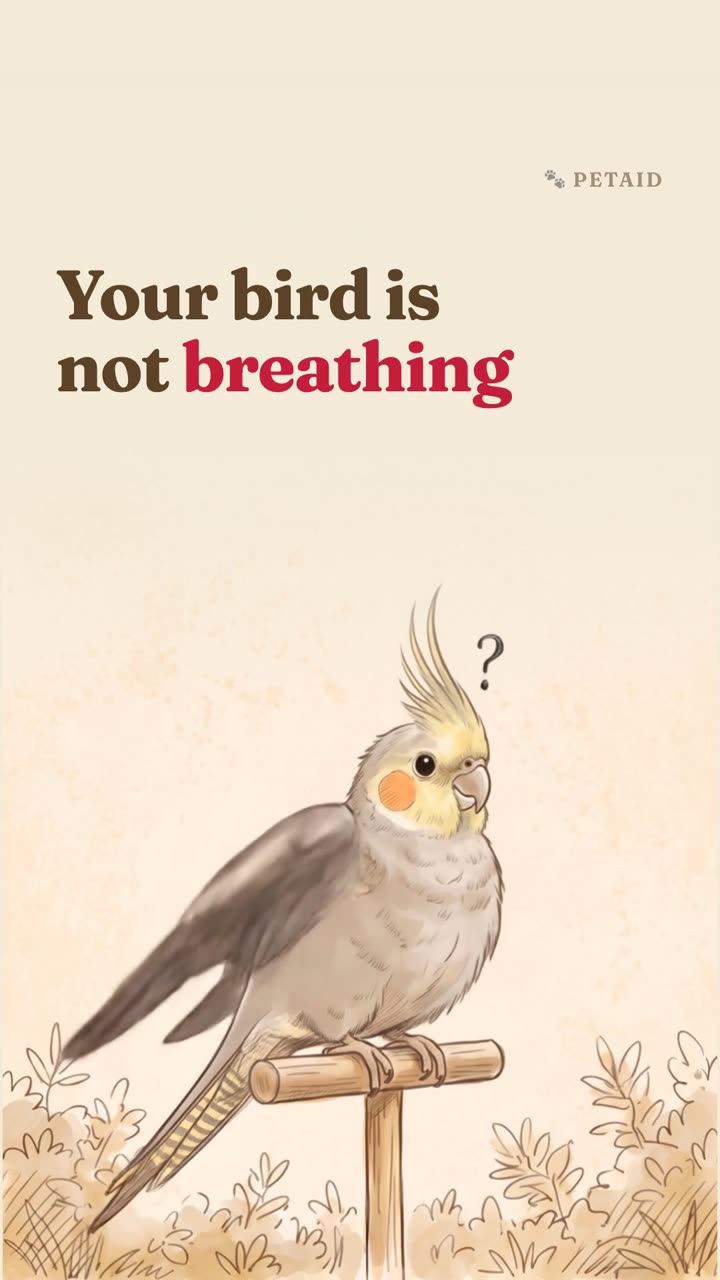 What to do if your bird is not breathing
Keep the steps on your phone
PetAid for iPhone, for dogs, cats, rabbits, birds, fish and reptiles. Free on the App Store.
Get PetAidQuestions people ask
Does a healthy bird need an avian vet?
It helps a lot. Merck suggests a checkup every year, and AAV points out that a vet who has seen your bird when well knows its usual weight and behavior. Look for one with the Find a Vet tool at aav.org or the ABVP search for board certified avian vets.
Should I wait until morning to see if my bird gets better?
No. The AAV tells owners not to hold off until tomorrow, because a bird is often sick for a while before signs show. Phone an avian vet or a bird-friendly emergency clinic tonight. Meanwhile keep your bird quiet, with the air around it at about 80 to 85 F. Merck says a bird that pants or spreads its wings is probably too hot.
Are nonstick pans really dangerous to birds?
They can be. Merck notes that some nonstick cookware releases a toxic gas when a pan overheats to about 536 F, and small birds often die suddenly after very little exposure. Some irons, self-cleaning ovens and heat lamps can release it too, so keep the cage well away from the kitchen. A bird wheezing or struggling to breathe after fumes needs an avian vet at once.
Why is my bird's first dropping of the morning so big?
That is usually normal. Some birds hold their droppings overnight, so the first one is a large mix of feces and urine, and AAV notes it is often looser and can smell stronger. Judge color and texture from later droppings. A hen getting ready to lay can also pass large droppings.
What should I bring to the avian vet?
Your weight log, and the most recent paper from the cage floor so the vet can look at the droppings. For a checkup, Merck suggests bringing your bird in its own cage, or photos of the setup if that is not practical. In an emergency, use a warm carrier with a towel over at least three sides, and a passenger can pull up bird first aid steps in PetAid.
This is first aid, not veterinary care. Get to a vet or an emergency animal hospital as soon as the steps are done.
Sources
- Association of Avian Veterinarians, Signs of Illness in Companion Birds
- Merck Veterinary Manual, illness in pet birds
- Merck Veterinary Manual, injuries and accidents of pet birds
- Merck Veterinary Manual, supportive care of sick birds
- Merck Veterinary Manual, management of pet birds (professional)
- Merck Veterinary Manual, toxicoses of pet birds (professional)
- Merck Veterinary Manual, digestive disorders of pet birds
- Merck Veterinary Manual, reproductive disorders of pet birds
- Merck Veterinary Manual, reproductive diseases of pet birds (professional)
- Merck Veterinary Manual, veterinary care for pet birds
- VCA Animal Hospitals, abnormal droppings in birds
- VCA Animal Hospitals, liver disorders in birds
- LafeberVet, recognizing signs of illness in birds
- Avian and Exotic Animal Hospital, San Diego, common avian emergencies
- Pismo Beach Veterinary Clinic, avian diet conversion and weighing