
Rabbit first aid, step by step
Watch appetite and droppings every day: rabbits often hide illness, and a skipped meal or fewer droppings is a reason to call a vet who treats rabbits right away. A healthy adult pet rabbit at rest runs 101.5 to 104.2 F, with a heart rate of 180 to 350 and 30 to 60 breaths a minute.
Written by Justin Alcalde, AHA and American Red Cross instructor, CPR West Covina · Reviewed
Pick the emergency
What normal looks like in a rabbit
Published rabbit ranges differ a little. For temperature, House Rabbit Society uses 101 to 103 F, slightly lower than the Merck range below. Stress can push a reading up, so count while your rabbit rests calmly.
| Check | Normal at rest | How to check |
|---|---|---|
| Temperature | 101.5 to 104.2 F. Below 100.4 F or above 105 F is a warning sign | Rectal, with a lubricated digital thermometer. Leave it to your vet unless your vet has shown you how: a rabbit that kicks can hurt its back |
| Heart rate | 180 to 350 beats a minute | Hand flat on the lower left chest, or fingers on the inner upper thigh. Count 15 seconds, times 4 |
| Breathing | 30 to 60 breaths a minute, through the nose | Watch the chest rise and fall at rest. Count 15 seconds, times 4. Open mouth breathing is a sign vets treat as an emergency |
| Droppings and appetite | Plenty of large, round droppings and a steady appetite | Look in the litter box and food bowl every day. Even one missed meal can signal serious illness |
How to check your rabbit's breathing, heartbeat and gut
Do every check with your rabbit on the floor. Merck warns that a struggling rabbit can break its lower back, so if you must lift, read how to pick up a rabbit first.
Let your rabbit settle
Wait until it is lying still and relaxed, not right after play.
Count breaths for 15 seconds
Watch the chest, or feel each exhale near the nose, then multiply by 4.
Feel the lower left chest
Or the inner upper thigh, then count beats for 15 seconds, times 4.
Feel both ears
Healthy ears feel warm, so note any that feel hot or cold.
Check the litter box
Compare the size, shape and number of droppings with your rabbit's usual.
Keep a daily note
Droppings can get smaller or fewer over days, and a log shows it.
What your rabbit's droppings can tell you
House Rabbit Society calls droppings and urine the easiest health signs to spot. Smaller or fewer droppings can be an early sign of GI stasis, so compare them with your rabbit's usual each day.
| What you see | What it can be a sign of | What to do |
|---|---|---|
| Plenty of large, round, firm droppings | A gut that is moving well | Nothing. Note how many you usually see |
| Smaller, drier or fewer droppings | The gut slowing down, or not enough hay | Call your vet promptly. If it has also stopped eating, call now |
| No new droppings for several hours | The gut may have slowed right down, or be blocked | Call a vet who treats rabbits now. None for 12 hours is an emergency |
| Soft, sticky clusters left uneaten | Leftover cecotropes: a diet too rich, a gut problem, or a rabbit that cannot reach its bottom | Book a vet visit if you keep seeing them. Healthy rabbits usually eat these straight from the bottom |
| Loose or watery stool | Diarrhea, a serious warning sign in a rabbit of any age | Go to a vet now. It is easy to mix up with soft cecotropes, so take a photo |
| Small droppings in mucus, or jelly-like stool | An inflamed gut, such as enteritis or mucoid enteropathy | Treat it as an emergency and go to a vet now |
Watch the steps
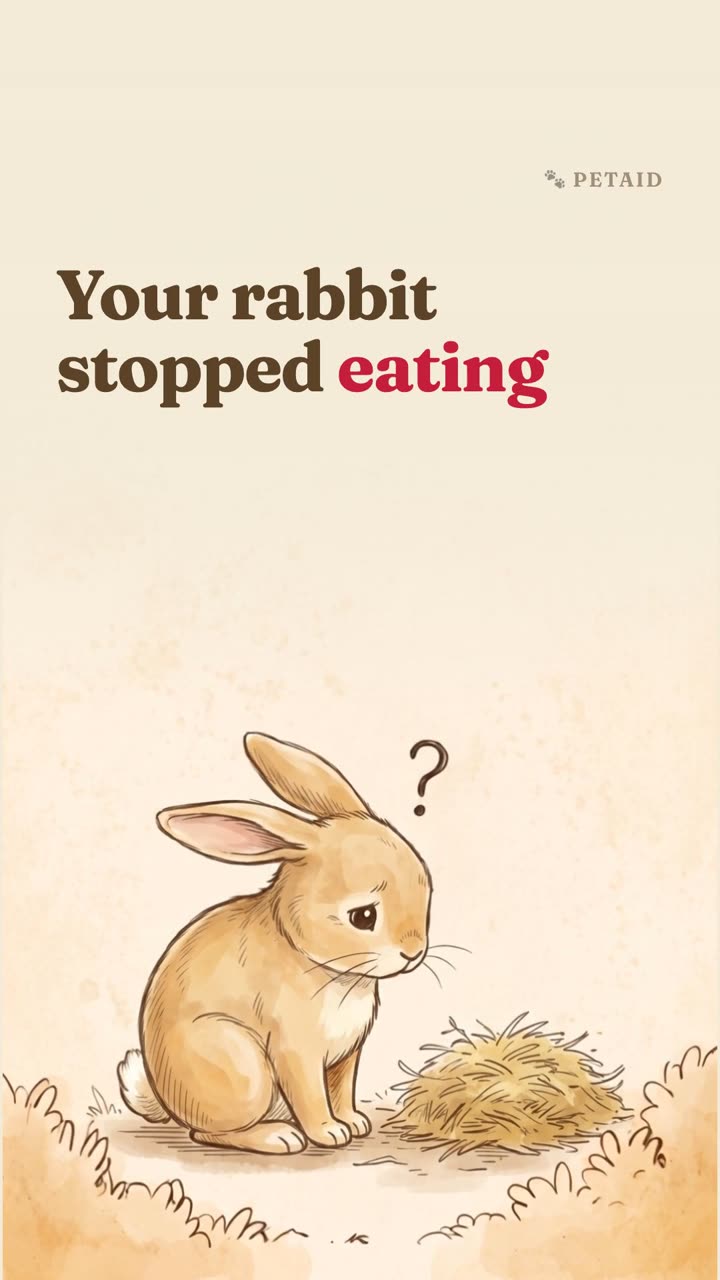 Your rabbit stopped eating: what to do
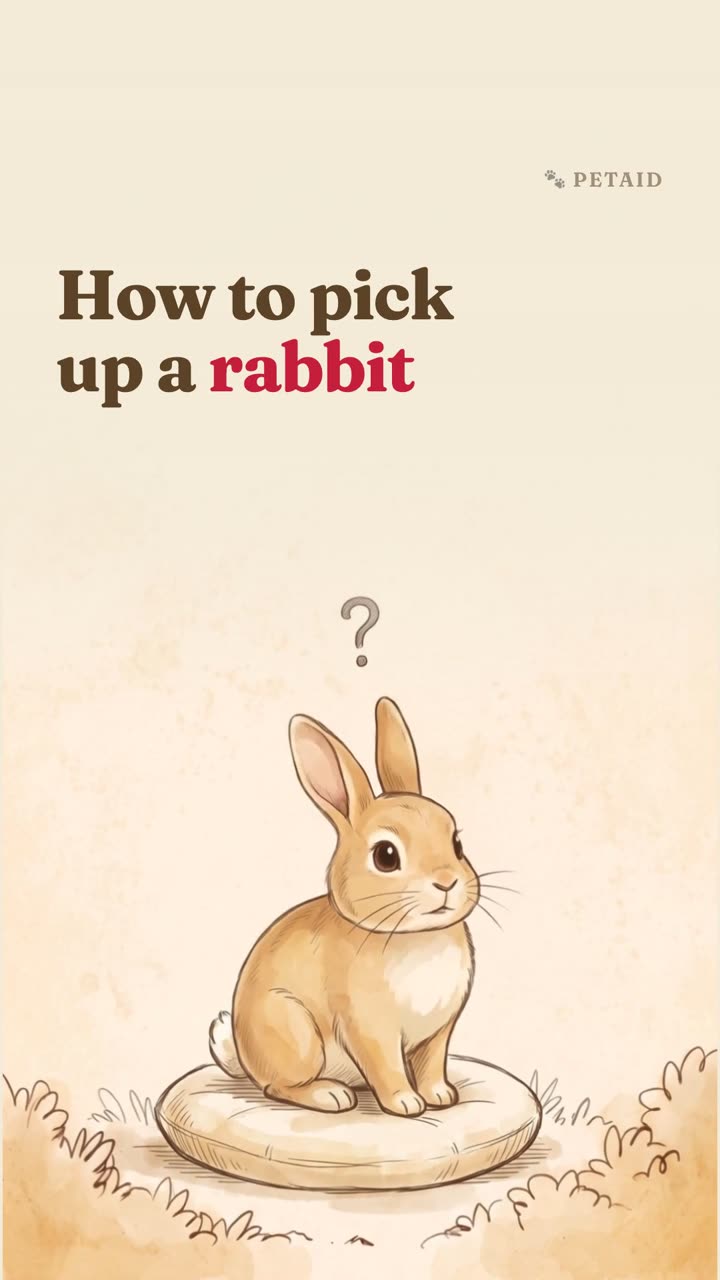 How to pick up a rabbit
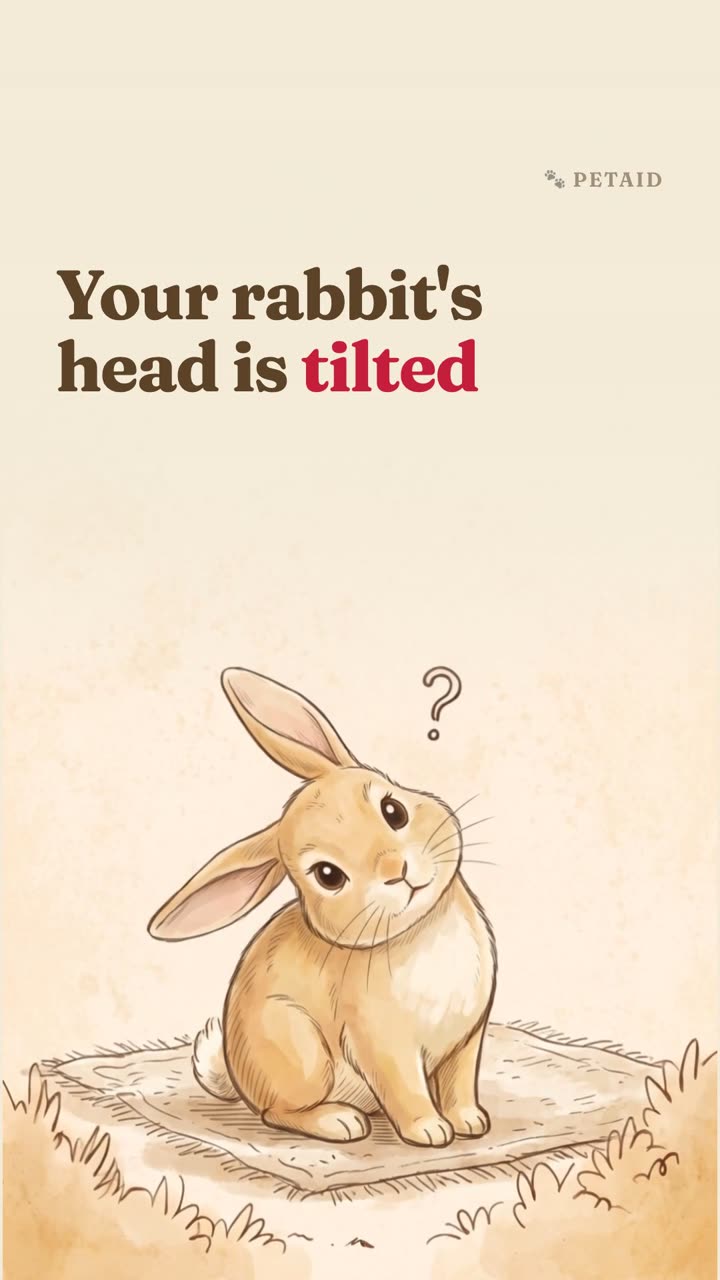 What to do when your rabbit's head is tilted
Keep the steps on your phone
PetAid for iPhone, for dogs, cats, rabbits, birds, fish and reptiles. Free on the App Store.
Get PetAidQuestions people ask
How do I find a vet who treats rabbits?
Line one up now. A University of Miami rabbit care page warns that many emergency clinics will not see rabbits, and head tilt can improve when treatment starts quickly. House Rabbit Society links to rabbit vet lists for Los Angeles and Southern California, and the Association of Exotic Mammal Veterinarians has a search by location. Once the number is saved, PetAid puts rabbit first aid steps on the same iPhone.
Can my rabbit's ears tell me if it has a fever?
Only roughly. Rabbits use their ears to shed heat, and rabbit.org notes that noticeably hot or cool ears can point to a fever or a low temperature. Paired with another sign, such as not eating, that is worth a vet visit. Only a thermometer gives you a number.
Should I take my rabbit's temperature at home?
Only once your vet has shown you how. House Rabbit Society suggests keeping a digital thermometer and water-based lubricant in your kit and practicing on a calm day, long before an emergency. Until then, go by appetite, droppings and ear warmth.
Is it normal for my rabbit's nose to stop twitching?
It can be. A healthy rabbit's nose moves roughly 20 to 120 times a minute, and it can go still when the rabbit is deeply relaxed. A very ill rabbit's nose can go still too, so check appetite and droppings as well.
This is first aid, not veterinary care. Get to a vet or an emergency animal hospital as soon as the steps are done.
Sources
- Merck Veterinary Manual, normal rectal temperature ranges
- Merck Veterinary Manual, resting heart rates
- Merck Veterinary Manual, illness of rabbits
- Merck Veterinary Manual, digestive disorders of rabbits
- Merck Veterinary Manual, routine health care of rabbits
- Merck Veterinary Manual, management of rabbits
- Mitchell and Tully, Manual of Exotic Pet Practice, rabbits chapter (2009)
- House Rabbit Society, rabbit droppings as health indicators
- House Rabbit Society, rabbit emergency supply kit
- House Rabbit Society, finding a rabbit vet
- Association of Exotic Mammal Veterinarians, find an exotic vet
- Rabbit.org, monitoring your rabbit's vital signs
- Rabbit.org, is your rabbit sick? (San Diego House Rabbit Society)
- Rabbit.org, how to keep your rabbit cool in summer
- VCA Animal Hospitals, health problems in rabbits
- VCA Animal Hospitals, gastrointestinal stasis in rabbits
- MSPCA Angell, gastrointestinal stasis and obstruction in rabbits
- Dana Krempels, University of Miami, gastrointestinal stasis